Is RISC-V the Future of Single-Board Computing?
estimated read time: 4 minutes
The Raspberry Pi Model 4 has been almost impossible to obtain for the past few years, thanks to the pandemic and the resulting silicon shortage—exacerbated by the crypto bubble. This has left many users frustrated and searching for alternatives.
In this context, the emergence of RISC-V as a potential replacement for the Raspberry Pi has become increasingly significant. Whilst the Pi's established ecosystem and versatility make it a popular choice, supply constraints have encouraged users to explore other options.
One advantage of RISC-V is that it's an open-source architecture. Companies and individuals can create custom chips without incurring significant licensing costs. This could prove particularly useful for smaller companies competing in a market dominated by three major processor manufacturers: ARM, Intel, and AMD.
Moreover, RISC-V's modular design and scalability make it an attractive option for developers who need greater flexibility and control over their hardware. The RISC-V ecosystem is still developing, but software and hardware options are already emerging, with more likely to follow.
So whilst the Raspberry Pi remains a popular choice for many users, the supply shortage has opened the door to alternatives like RISC-V. As the ecosystem continues to mature, it's worth keeping an eye on this architecture.
RISC-V Single-Board Computers
Whilst exploring this topic, I came across several boards worth mentioning. As you'll see, this is very much early-adopter territory—suitable only for those willing to troubleshoot driver issues and performance problems. That said, for those who remember the original Pi, it wasn't much better either.
MangoPi MQ Pro
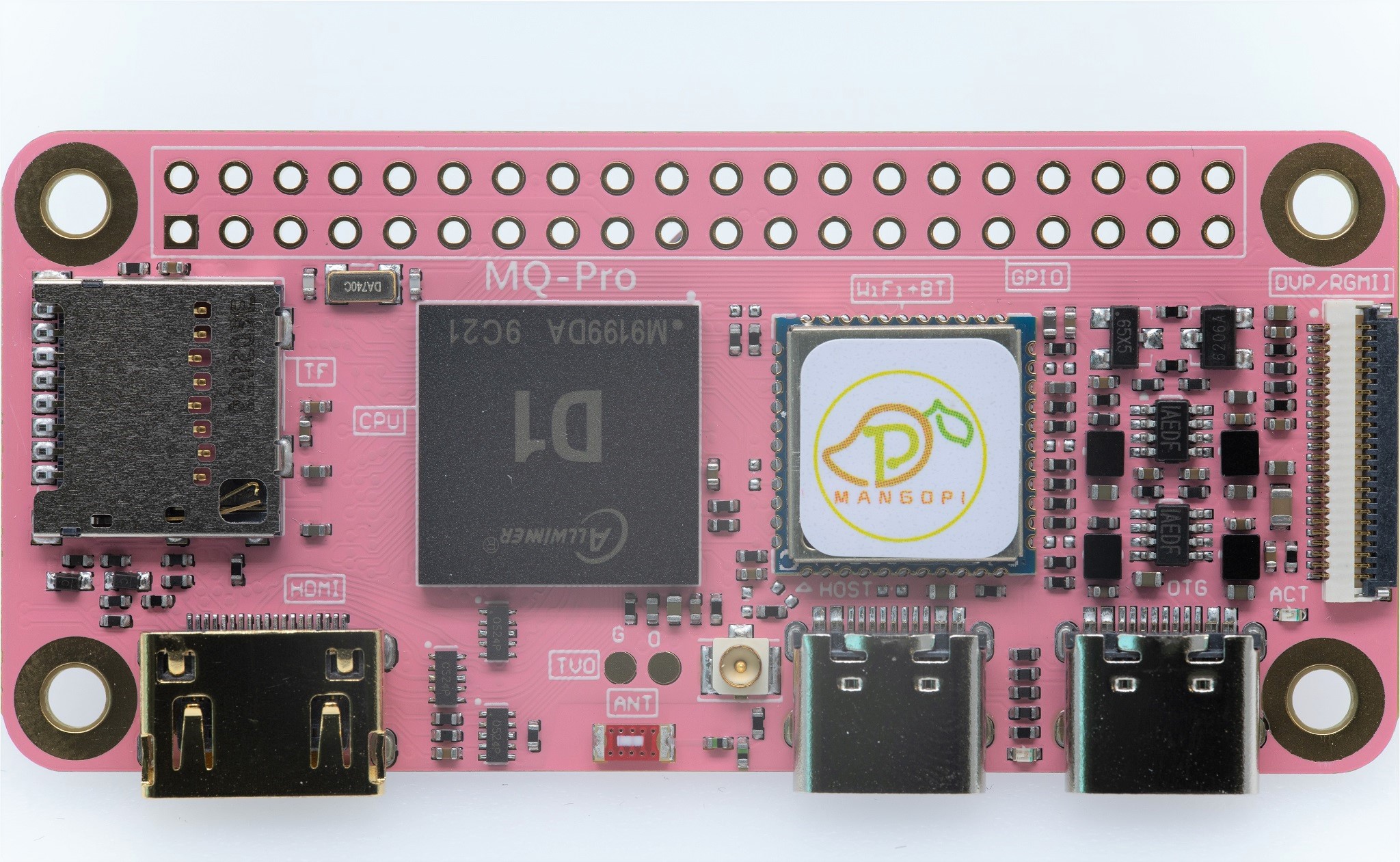
This micro development board is designed to run Tina-Linux or Debian. Despite its compact size, it offers all the essential functions. Equipped with the D1 (RISC-V core) as the main controller, the board provides various peripheral ports: GPIO, I2C, SPI, SDIO, audio (record and playback), video (touch, HDMI, DVP, DSI, and LVDS), USB Host, and OTG. It also includes built-in 512MB or 1GB DDR and onboard Wi-Fi/Bluetooth, with full Linux and Python support.
Models
- MPi-MQ1PL: Wi-Fi + Bluetooth, 512MB DRAM
- MPi-MQ1PH: Wi-Fi + Bluetooth, 1GB DRAM
Specifications
- D1, C906 Core, RISC-V core up to 1GHz
- 512MB or 1GB DDR3/DDR3L
- USB-OTG Type-C
- USB-HOST Type-C
- 40-pin Raspberry Pi-compatible expansion header
- 24-pin DVP/RGMII connector
- Mini HDMI connector
- TF card slot
- RTL8723ds Wi-Fi/Bluetooth module
- 20-pin DSI/CTP/LVDS FPC connector
- Audio output pads
- Onboard Wi-Fi/Bluetooth antenna
- Dimensions: 6.5 × 3cm
StarFive VisionFive 2
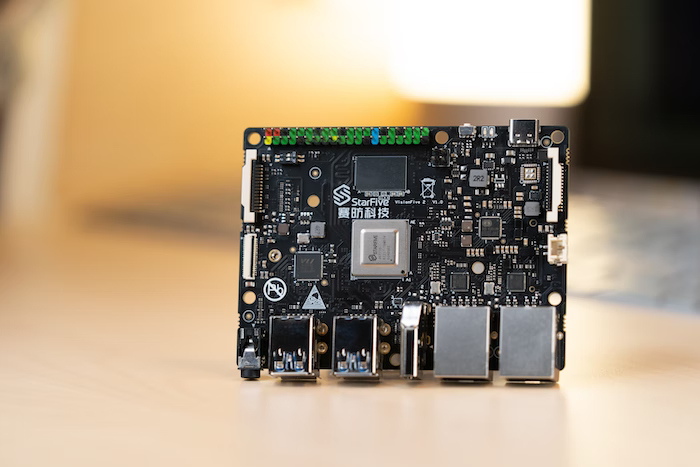
Models
- VisionFive 1: Dual-core 64-bit RV64GC SoC with 2MB L2 cache @ 1.0GHz
- VisionFive 2: Quad-core 64-bit RV64GC SoC with 2MB L2 cache @ 1.5GHz
VisionFive 1 Specifications
- Wi-Fi: 2.4GHz IEEE 802.11ac
- 1 × HDMI 2.0 (up to 1080p @ 60fps)
- Memory: 8GB LPDDR4
- 2-lane MIPI DSI display port
- 1 × Gigabit Ethernet
- Video decoder (H.264/H.265) up to 4K @ 60fps
- 2 × USB 2.0 ports, 2 × USB 3.0 ports
- M.2: None
- Power: 5V DC via USB-C or GPIO header (min 3A)
- GPU: None
VisionFive 2 Specifications
- Wi-Fi: None (available via M.2 expansion)
- 1 × HDMI 2.0 (up to 4K @ 30fps)
- Memory: 2GB/4GB/8GB LPDDR4
- 1 × 4-lane MIPI DSI display port
- 1 × 2-lane DSI display port
- 2 × Gigabit Ethernet
- Video decoder (H.264/H.265) up to 4K @ 60fps
- 4 × USB 3.0 ports
- M.2: 1 × M-Key
- Power: 5V DC via USB-C or GPIO header (min 3A)
- GPU: OpenGL ES 3.2, OpenCL 1.2, Vulkan 1.2
Conclusion
The global chip shortage and the emergence of RISC-V as a potential competitor in the single-board space offer hope for frustrated Raspberry Pi enthusiasts. Whilst the Pi's established ecosystem and versatility continue to make it a popular choice, supply constraints have opened the door to alternatives.
RISC-V's open-source architecture, modular design, and scalability make it an attractive option for developers seeking greater flexibility and control. The ability for companies and individuals to create custom chips without significant licensing costs could prove particularly valuable for smaller players in the market.
As the RISC-V ecosystem continues to mature, it's certainly one to watch.
Related Articles
Automating Cloudflare DNS Updates from a Kubernetes CronJob
When my ISP started rotating my residential IP weekly, I stopped updating Cloudflare manually and built a Kubernetes CronJob that does it automatically every 15 minutes.
k3s HA on Raspberry Pi: Zero-Downtime Cluster in 45 Minutes (Multi-Master + MySQL)
Stop single-point failures. Build a production-grade k3s cluster with 3 master nodes, external MySQL, and load balancing—all on budget Pi hardware. Step-by-step guide with troubleshooting.
Setting Up MetalLB on K3s
How to install MetalLB on a bare-metal K3s cluster to get real LoadBalancer services without relying on a cloud provider.
Setting Up Proxmox
A practical guide to setting up Proxmox VE as a hypervisor for homelab virtualisation — installation, networking, and getting your first VMs running.